
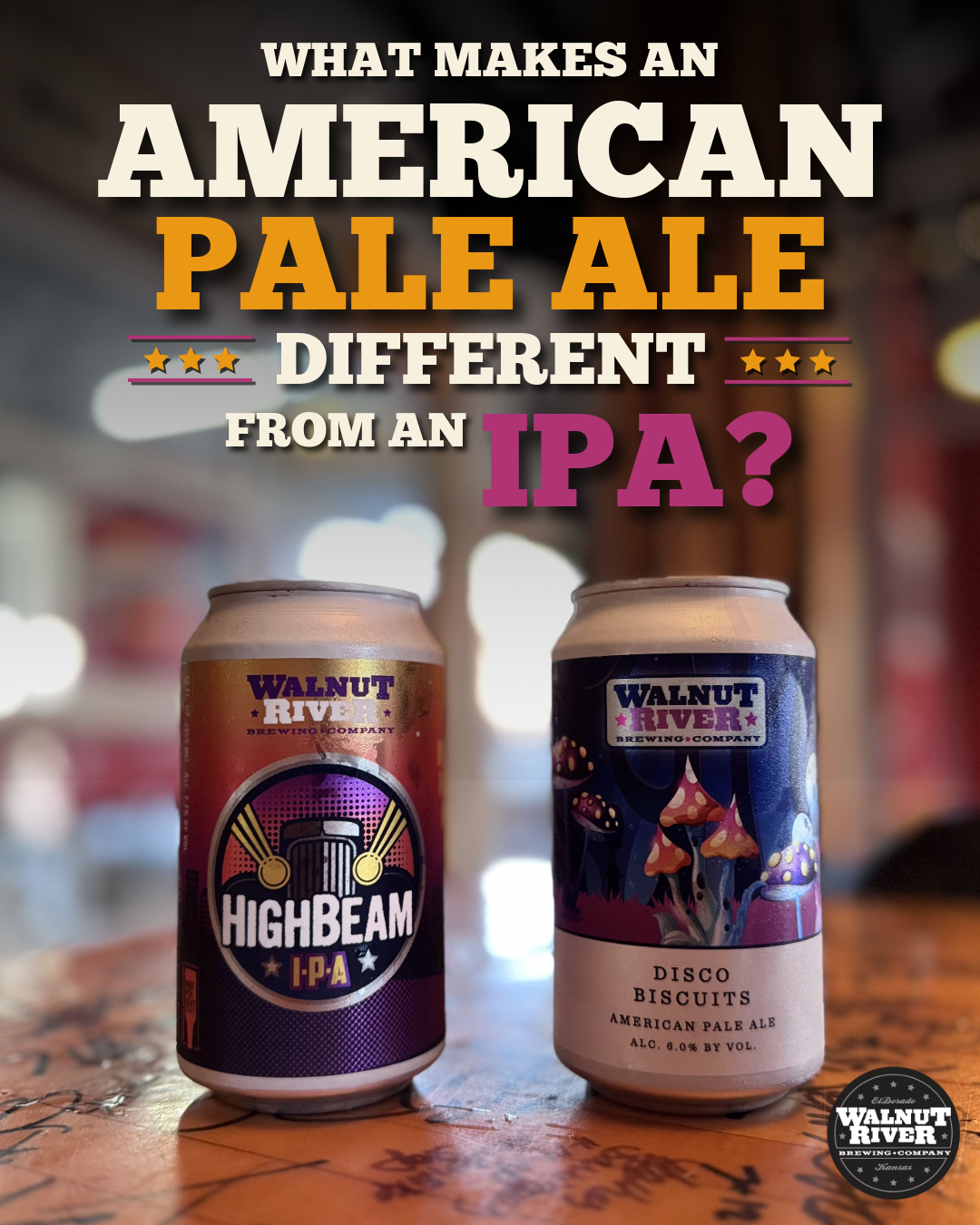
What Makes an American Pale Ale Different from an IPA?
If you’ve ever stood at a bar squinting at a menu full of “APA” and “IPA,” you’re not alone. The names are close enough to blur together, and the beers themselves can look almost identical in the glass. But there’s a real difference, and once you know what to look for, you’ll never mix them up again.
They’re Cousins, Not Twins
Both styles come from the same family tree. American Pale Ale (APA) and India Pale Ale (IPA) both lean on hops, the flowery, piney, citrusy ingredient that gives craft beer its bite, and both were born out of America’s love affair with big, hop-forward flavor. Think of the APA as the friendly older sibling and the IPA as the one who never learned to pace itself.
The Big Difference: Volume
The easiest way to think about it is volume, like a stereo knob.
Pale Ale turns the hops up to a solid, enjoyable level. You get real hop character, citrus, floral, maybe a little pine, but it doesn’t overwhelm everything else going on in the glass.
IPA cranks that same knob much further. More hops, more bitterness, more of that punchy aroma that hits you before the beer even touches your lips.
Because of this, pale ales tend to feel more balanced and easygoing, while IPAs are built to make a statement.
Bitterness and Body
Hops don’t just add flavor, they also add bitterness, and this is where the two styles really part ways.
Pale ales usually have moderate bitterness. There’s enough to make the beer interesting, but the malt (the sweeter, bread-like backbone of any beer) still gets a say. That balance is part of why pale ales are often described as more “drinkable” or “sessionable” beers; you can enjoy a couple of them without feeling worn out.
IPAs push bitterness front and center. The malt is still there, but it takes a back seat to the hops. IPAs also tend to run a bit stronger in alcohol content than pale ales, which adds to that bigger, bolder impression.
Color and Aroma
Despite the name, “pale” ale isn’t necessarily lighter in color than an IPA; both styles usually land somewhere between golden and amber. The real giveaway is in the nose. IPAs typically have a much more intense aroma, since brewers often add extra hops after the boil (a technique called “dry hopping”) specifically to pump up the smell before you even take a sip.
Which One Should You Order?
If you want something hoppy and flavorful but easy to keep drinking, reach for a pale ale. If you want big, bold, in-your-face hop character, the kind of beer that announces itself, go for the IPA.
Either way, both styles show off what makes American craft beer so much fun: brewers taking a simple idea (hops!) and pushing it in different directions to see what happens.
Next time you’re deciding between the two, you’ll know exactly what sets them apart, and exactly what you’re in the mood for.
#FloatTheRiver
